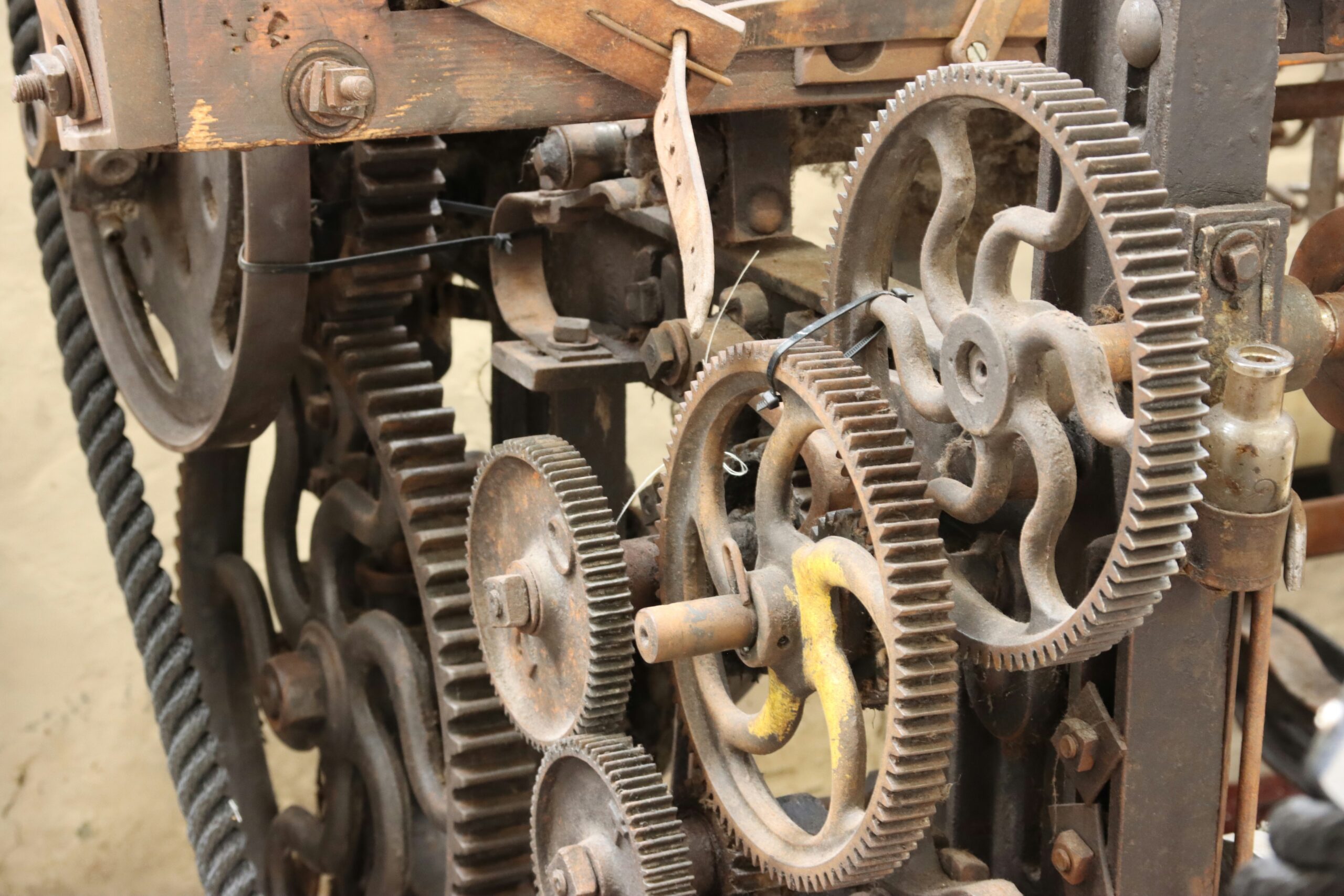
The Sim Corder/Harrison Mill stands as a strong example of how early engineering shaped local industry. Long before modern factories used electric motors and automated systems, mills relied on practical design and natural power. Builders had to make every part of the structure serve a clear purpose. As a result, the mill became both a workplace and a machine.
Moreover, the mill’s value goes beyond its age. It shows how early builders solved complex problems with simple tools, local materials, and careful planning. Water supplied the power. Mechanical parts transferred that power. Workers managed the system and kept it running. Therefore, the mill remains a useful example of engineering that matched technology with real community needs.
A Design Built Around Function
The layout of an early mill had to support constant movement and heavy work. Builders could not place rooms, machinery, and structural parts at random; instead, every section needed to support the production process. As a result, the building itself became part of the engineering system.
In addition, the structure had to support weight, motion, and vibration. Floors and beams needed enough strength to hold machinery and stored materials. Therefore, builders had to think carefully about balance and stability. This practical approach helped the Sim Corder/Harrison Mill operate efficiently and safely.
Waterpower Drove the Entire System
Water served as one of the most dependable power sources available to early industry. By directing flowing water toward a wheel, mill operators could create steady mechanical motion. As a result, they could reduce the need for constant human or animal labor.
However, waterpower required careful control. Too little flow could slow production, while too much water could create problems. Therefore, operators needed to understand local water conditions and seasonal changes. This connection between nature and machinery became one of the most important features of historic mill engineering.
The Waterwheel Turned Nature Into Motion
The waterwheel played a central role in the mill’s operation. As water pushed the wheel, it began to rotate. That movement then became the starting point for other mechanical processes. As a result, one simple natural force could support several tasks inside the mill.
Furthermore, the wheel needed to match the available water source. Its size, position, and construction all affected performance. Therefore, builders had to make practical engineering choices based on local conditions. This ability to adapt the system to the environment helped make water-powered mills effective.
Gears Helped Control Mechanical Power
The mill needed more than raw motion. It also needed a way to direct that motion toward specific equipment. Gears allowed operators to transfer power and control speed. As a result, the mill could use one energy source for different types of mechanical work.
At the same time, gears needed precise alignment. If the teeth did not meet correctly, the system could lose power or suffer damage. Therefore, workers had to inspect these parts and correct problems quickly. Their attention helped keep the entire system working smoothly.
Shafts Connected the Mill’s Moving Parts
Shafts carried rotational movement from one area of the mill to another. This allowed the power source to reach machines located in different parts of the building. As a result, workers could organize equipment to support efficient production.
Moreover, the shafts needed strong support. Poor alignment could create friction, vibration, and wear. Therefore, builders had to position them carefully. This part of the design shows how the mill depended on many connected components rather than one single machine.
Strong Materials Supported Long-Term Use
Historic builders often used wood because it was available, workable, and strong enough for many purposes. They also used metal where extra strength was needed. As a result, the mill combined different materials based on function rather than appearance.
However, choosing materials required practical knowledge. A moving part needed different qualities than a fixed support beam. Therefore, builders had to understand how materials would perform under pressure. This careful selection helped the mill remain dependable over time.
Skilled Workers Completed the Engineering System
Machines could not manage themselves. Workers needed to start, stop, monitor, and adjust the equipment. As a result, human knowledge became as important as mechanical design.
In addition, experienced workers learned how the mill sounded and felt during normal operation. A new vibration or unusual noise could signal a problem. As a result, workers often detected trouble before a major breakdown occurred. Their awareness helped protect both the machinery and the production process.
Maintenance Protected the Mill’s Performance
Moving parts naturally wore down over time. Gears could weaken, shafts could shift, and wooden pieces could crack. As a result, regular maintenance became essential.
Furthermore, workers often repaired parts with the materials and tools available to them. They needed to understand not only what failed but also why it failed. As a result, maintenance encouraged problem-solving and practical learning. This constant attention helped extend the equipment’s useful life.
Efficient Design Reduced Hard Labor
One of the greatest benefits of mill engineering was reduced physical strain. Machines could repeat demanding tasks that once required significant human effort. Consequently, workers could process more material in less time.
However, workers did not disappear. Instead, their responsibilities changed. They spent more time operating equipment, checking production, and making adjustments. As a result, the mill shifted labor from pure physical effort to more skilled mechanical work.
The Mill Responded to Local Conditions
Successful mill engineering depended on the surrounding landscape. Builders had to understand the water source, land shape, and access routes. As a result, the mill’s design reflected its location.
Operators also had to adapt as conditions changed. Dry weather could reduce water power, while storms could increase flow. Therefore, flexibility became an important part of daily operation. This ability to respond to nature made the mill more resilient.
Innovation Came Through Daily Improvements
Early innovation often happened through small changes rather than dramatic inventions. Workers could adjust a gear, reinforce a support, or improve the way materials moved through the building. As a result, these changes could improve efficiency and reduce downtime.
Moreover, each improvement added to the practical knowledge of the people who worked there. Workers learned from experience and passed useful methods to others. As a result, the mill became a place where engineering knowledge continued to grow over time.