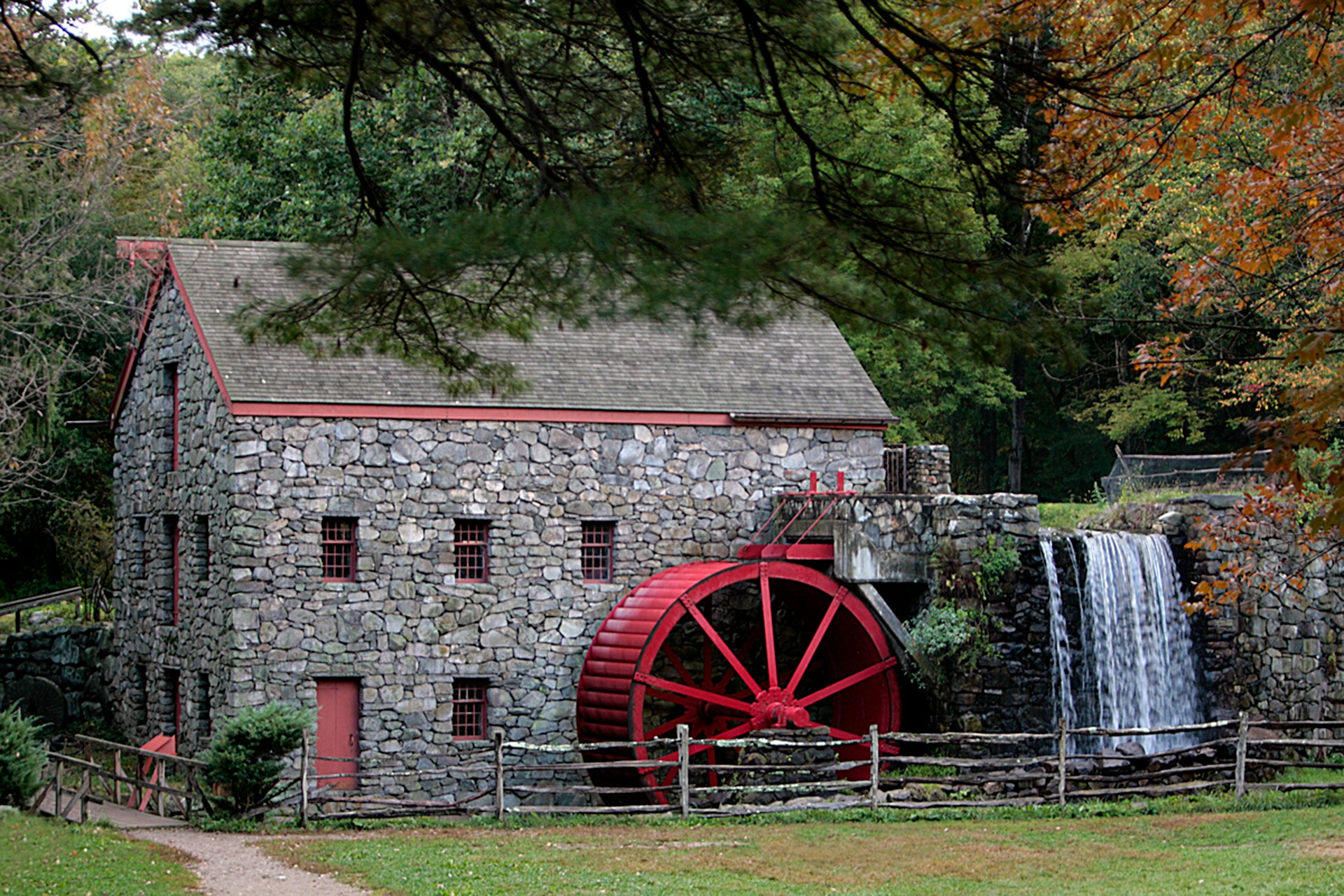
Long before digital controls and electric motors shaped modern industry, builders had to solve complex problems with natural power, mechanical skill, and practical materials. The Sim Corder/Harrison Mill in Limestone County, Alabama, reflects that earlier form of ingenuity. Its design shows how water, structure, and machinery could work together as one system. Through historic waterpower engineering, the mill turned a natural resource into useful mechanical motion while supporting the needs of the surrounding community.
The mill dates to 1909, when Simeon Corder is said to have arranged with George Hamilton to build and operate it. Over time, ownership changed, and the Harrison family became closely connected to the property after George Harrison purchased it in 1927. Although many mills once stood along Limestone County waterways, the Sim Corder/Harrison Mill is identified by its historical marker as the only one restored to its historic appearance.
Harnessing Moving Water With Purpose
Water was one of the most useful energy sources available to early mills. Instead of depending on fuel or electricity, mill operators could use flowing water to create steady mechanical motion. This made location a major part of engineering design.
At the Sim Corder/Harrison Mill, the waterwheel formed the heart of that system. Water moving through the millrace could reach the wheel and create rotational force. That motion could then support mechanical work within the mill. The system shows how early builders worked with the landscape rather than trying to separate industrial activity from it.
The surviving historical record also shows how important the wheel was to the identity of the property. It was sold and moved to Anderson, Alabama, in 1939. After decades away and significant deterioration, it received major repairs and returned to its original position in 1996. A new millrace also helped return the site to its earlier appearance.
Turning Natural Force Into Mechanical Motion
A waterwheel alone could not perform useful work. Engineers also needed a way to transfer its rotation into the equipment inside the structure. This required careful use of shafts, gears, and connected mechanical parts.
The basic principle was simple but effective. Moving water turned the wheel. The wheel then transferred motion through connected components, allowing different parts of the mill to operate. Each stage needed to work with the next so the system could deliver steady power without wasting too much energy.
Historical descriptions of the mill emphasize interconnected mechanical systems and controlled transfer of movement. These features show the practical thinking behind early mill design. Builders had to consider force, speed, friction, and maintenance even though they lacked modern sensors and computer modeling.
That mechanical logic remains easy to appreciate today. The design relied on understandable relationships between moving parts. If something failed, skilled workers could inspect the system and often identify the source without advanced diagnostic equipment.
Designing a Structure for Constant Stress
Industrial buildings face forces that ordinary homes rarely experience. Heavy equipment, repeated vibration, shifting loads, moisture, and changing weather can all weaken a structure over time. Therefore, mills required strong framing and dependable foundations.
Accounts of the Sim Corder/Harrison Mill describe thick timber framing and substantial structural support. Wood gave builders a material they could shape, repair, and replace with available tools. At the same time, strong foundations helped carry the weight of both the building and its working equipment.
The layout also had to distribute weight carefully. Heavy machinery could not simply sit wherever space was available. Builders needed to consider how beams, floors, walls, and mechanical components would work together.
This balance between function and strength is one reason old mills remain valuable engineering examples. They show how builders achieved durability through proportion, material choice, and practical knowledge rather than relying on complex modern construction systems.
Managing Water With Greater Control
Using water as an energy source required more than placing a wheel beside a stream. The flow had to reach the system in a useful and reasonably controlled way. Too little water could reduce output, while uncontrolled flow could damage equipment or surrounding land.
The millrace played an important role in this process. It helped direct water toward the wheel and formed part of the larger relationship between the structure and the surrounding landscape. When the waterwheel returned in 1996, the addition of a new millrace helped restore the mill’s historic appearance.
Descriptions of traditional mill operation also note the importance of channels and flow controls. These systems allowed operators to manage available water and maintain more consistent mechanical power. Therefore, waterwheel energy systems depended as much on water management as they did on the wheel itself.
This approach offers an early example of working with renewable energy. The builders did not create the source of power. Instead, they designed a system capable of capturing and directing energy that already existed in the environment.
Choosing Materials That Could Last and Be Repaired
Early builders could not order specialized replacement parts with a few clicks. They needed materials that were strong, available, and workable with familiar tools. Therefore, material choice became part of practical engineering.
Wood played an important role in traditional mills because craftspeople could shape it into beams, floors, supports, and some mechanical components. Stone and other durable materials could provide strength in areas that faced moisture, weight, or direct contact with the ground.
Historical descriptions of the mill highlight the use of wood and stone as important parts of its construction. These materials supported durability while also making repair possible with local skills and resources.
Repairability is an important part of good design. A system that lasts only until one part breaks may appear advanced, but it can become expensive and difficult to maintain. In contrast, traditional mill construction often allowed workers to replace or repair individual pieces while keeping the larger system in service.
Balancing Efficiency With Simplicity
Good engineering does not always require greater complexity. In many cases, simple systems perform well because workers can understand, maintain, and adjust them easily.
The Sim Corder/Harrison Mill reflects this principle. Water supplied the original energy, while mechanical connections carried that power through the structure. Each part served a clear role within the larger process.
This simplicity could also make maintenance more practical. When gears, shafts, supports, or other components showed signs of wear, operators could inspect the physical system directly. Problems did not remain hidden inside sealed electronics or software.
Moreover, straightforward design supported long-term adaptability. Skilled workers could make adjustments as conditions changed. That ability helped traditional mechanical systems remain useful even when they lacked the automation found in modern industrial equipment.
Showing Why Restoration Matters to Engineering History
A historic mill can teach far more when important features remain in place. Without the waterwheel, millrace, structure, and surrounding setting, visitors might struggle to understand how the entire system once worked.
That is why restoration has played such an important role in the story of the Sim Corder/Harrison Mill. The waterwheel’s return after decades away restored one of the clearest visual links to its original function. Likewise, the reconstructed millrace helped reconnect the structure with the water system that gave it purpose.
The mill also holds unusual regional importance. Its historical marker notes that many mills once existed along Limestone County waterways, yet this one remains the only example restored to its historic appearance.
As a result, the property provides a rare opportunity to study early industrial thinking in a physical setting. It allows people to see how structure, energy, machinery, and landscape came together before electricity became the standard source of industrial power.
Finding Modern Lessons in an Earlier Machine
The lasting value of the mill can also be seen through practical mechanical design. Its engineering depended on ideas that still matter today, including efficient energy transfer, repairable components, strong materials, thoughtful water management, and a close relationship between a machine and its environment. Modern technology has changed the tools engineers use, but many of these basic goals remain familiar.
The Sim Corder/Harrison Mill shows that innovation does not always mean adding more technology. Sometimes it means creating a clear solution with the resources already available. Its restored waterwheel, millrace, and surviving structure provide a physical reminder of how earlier builders turned natural energy into dependable mechanical work. More than a century after the mill’s beginnings, its engineering story still offers useful lessons about durability, simplicity, resourcefulness, and design that serves a real purpose.