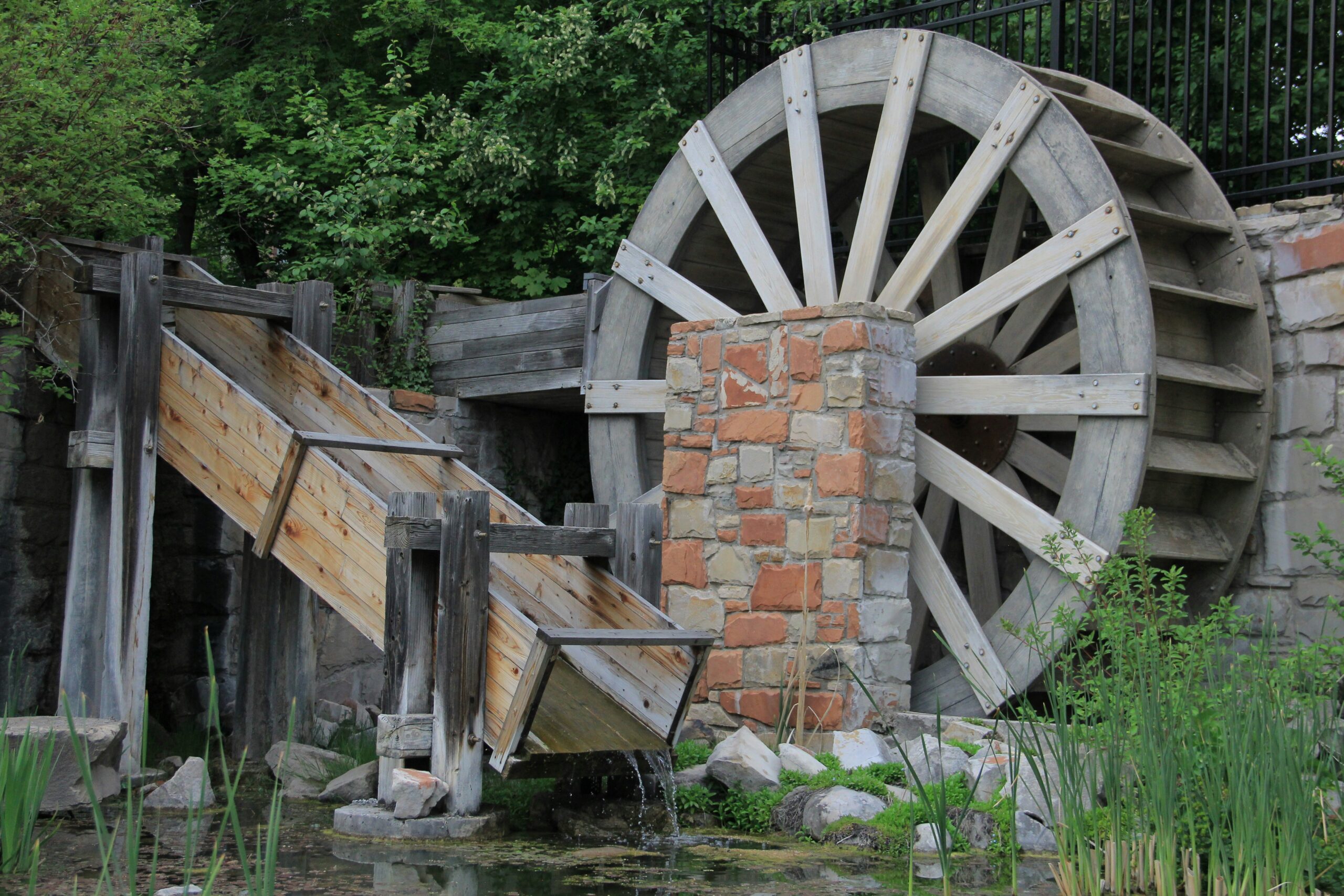
In the quiet rhythm of the countryside, where creeks carved through fields and time moved at the pace of labor, the Sim Corder/Harrison Mill stood as a beacon of progress. More than just a structure, it was a turning point in the transition from agrarian life to an early industrial society. As its wooden gears spun and its millstones ground grain to flour, the mill became a symbol of both practical invention and communal transformation. Its role in early industry reflects the deep interplay between technology, economy, and rural life.
Powering Rural Economies
The Sim Corder/Harrison Mill played a vital economic role in its region. In an age before electricity and paved highways, communities relied on mills not just for grinding grain but for survival. Farmers brought in their harvests to be processed into flour or meal, which could then be used to feed families, trade locally, or sell at markets. The mill served as a crucial link in the agricultural cycle, adding value to raw crops and helping rural families generate income.
It was often one of the first industrial establishments in a developing town, drawing farmers, artisans, and entrepreneurs to its doors. The mill’s success stimulated the local economy, encouraging the opening of general stores, blacksmith shops, and wagon repair services nearby. These businesses supported the needs of farmers and mill workers, creating a self-sustaining network of commerce.
In this way, the Sim Corder/Harrison Mill helped anchor an emerging industrial economy in the countryside. It was a place where work, trade, and invention merged, and its continuous operation marked the heartbeat of a growing, self-reliant community.
Technology Meets Tradition
What made the mill truly remarkable was its ingenious use of available technology. Long before engines roared and factories filled skylines, the mill harnessed the natural flow of water to produce power. A carefully constructed water wheel, connected to a series of wooden gears and shafts, drove the mechanical systems that ground grain, operated levers, and powered auxiliary tools.
Each component was a testament to traditional craftsmanship, handcrafted from locally sourced materials. The gears, often made of hardwoods such as oak or hickory, were meticulously cut to mesh perfectly, reducing wear and ensuring efficiency. The millstone—central to the entire operation—was carefully balanced and grooved to optimize grinding, a science in itself requiring years of skill and experience.
The design of the Sim Corder/Harrison Mill integrated simplicity and effectiveness. It relied on gravity to move materials from one floor to another, used tension-based systems to adjust pressure, and even featured early safety mechanisms to prevent overload or malfunction. These elements show that innovation doesn’t always require complexity—it often requires understanding the environment and using its forces wisely.
A Hub of Community and Culture
Beyond its industrial function, the mill was also a social center. The steady stream of farmers and laborers made it a natural meeting place. While grain was being milled, people exchanged news, shared advice, and forged relationships. In many communities, the mill was where decisions were made, partnerships were formed, and stories were passed down. It became a part of the cultural fabric as much as the economic one.
Many rural families planned their routines around mill visits, combining work with a rare opportunity for socialization. Children often accompanied parents, watching the great wooden cogs turn and learning the rhythm of rural life. The mill offered a sense of place and continuity, a reminder that hard work could yield tangible rewards and that progress, though slow, was always turning.
Surviving the Shifts of Time
As the Industrial Revolution advanced and new technologies emerged, many traditional mills faded into obscurity. Factories powered by steam and electricity began to replace water-powered sites, and large-scale production reshaped the economy. Still, the Sim Corder/Harrison Mill endured, adapting to change while retaining its core identity.
In later years, its operations may have slowed, but its legacy did not. Local preservationists recognized the mill’s historical value and stepped in to protect it from decay. Restoration efforts have ensured that the original design remains intact, allowing the site to function as a living museum. Today, the mill stands as one of the few remaining examples of early industrial architecture and engineering that still operates in its original form.
It serves not only as a tribute to the past but also as a teaching tool. Visitors can witness firsthand the technologies that shaped early industry, experiencing the sights, sounds, and textures of a bygone era. Schoolchildren study its mechanisms, engineers admire its efficiency, and historians value its authenticity.
Echoes of the Past in a Modern World
The Sim Corder/Harrison Mill’s influence stretches beyond its historical context. In an age focused on sustainability and local production, the principles it embodies—resourcefulness, community reliance, and ecological balance—are more relevant than ever.
Preserving the mill is not just about saving a structure; it’s about honoring the mindset that built it. It’s a celebration of early innovation that thrived without harming the environment, of industry rooted in necessity rather than excess, and of craftsmanship born from understanding rather than convenience.
As the mill’s wheel continues to turn, even if only for demonstration, it symbolizes the motion of history itself. It reminds us that every great movement starts with a single push and that the tools of yesterday still have the power to inspire tomorrow. The Sim Corder/Harrison Mill, in all its humble grandeur, remains a cornerstone of industrial heritage and a turning wheel in the story of American progress.